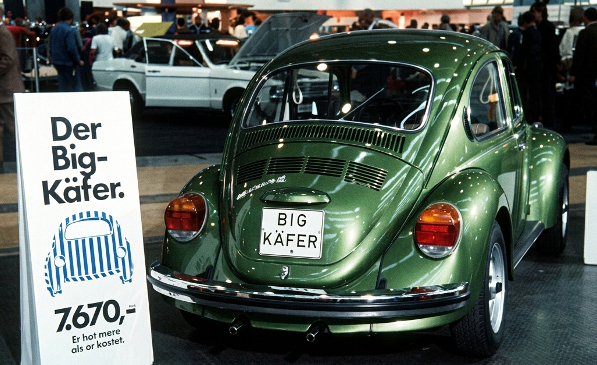
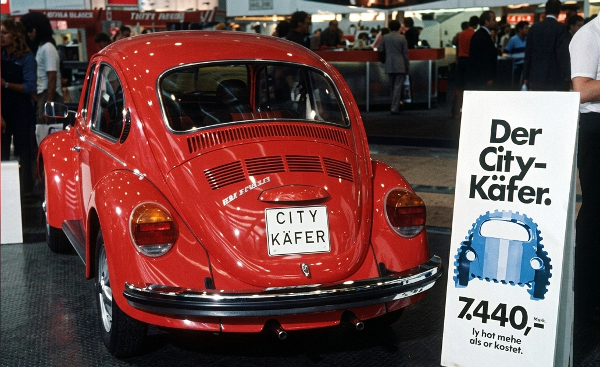
The "JEANS" Beetle, designed by Gunhild Liljequist (a design pioneer at Volkswagen), was unveiled at the Frankfurt International Motor Show in September 1973, alongside two other special editions: the 1303 "BIG" and the 1303 "CITY". These were part of the "Käfer der Käufer" program launched at that time.
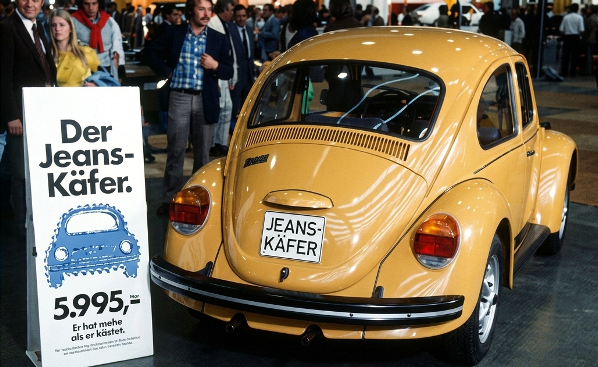
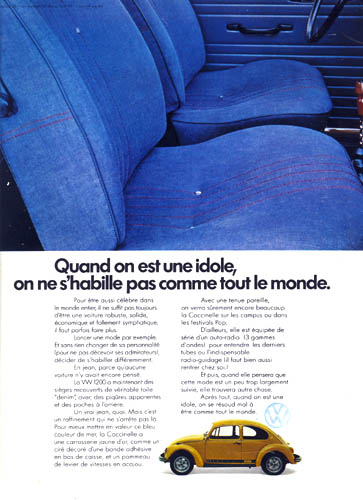
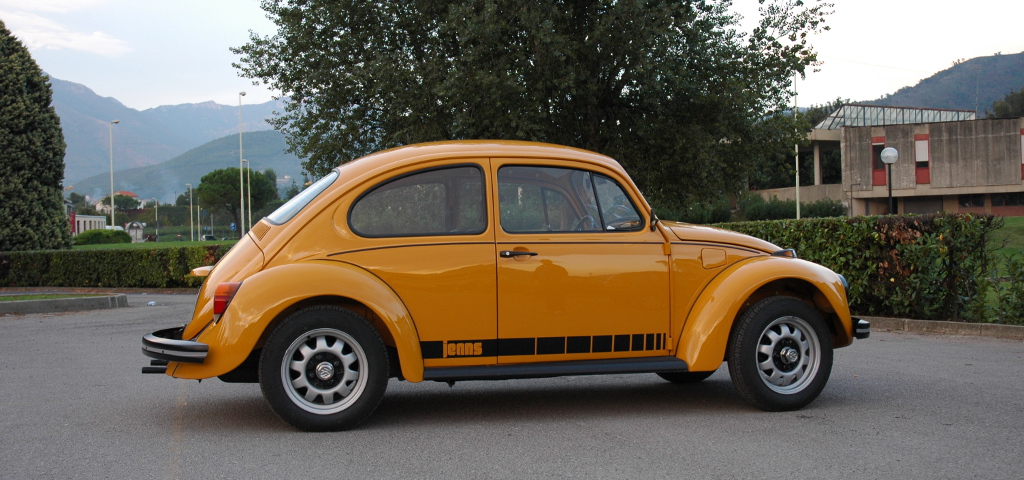
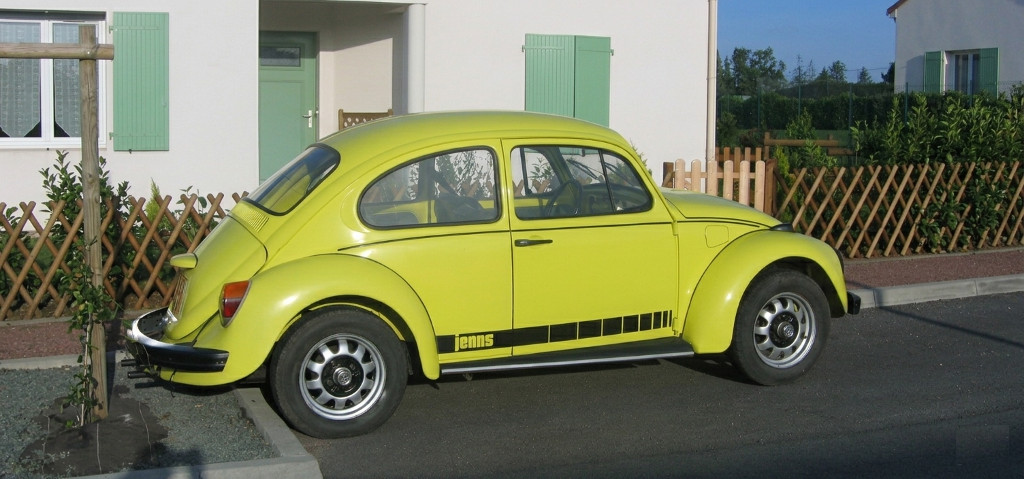
The very first models rolled off the production line on August 23, 1973. Officially named the "S761 Jeans" series, it was nonetheless referenced in VW records as the "Jeans Bug". Built on the 111 and 112 models of the 1974 model year, The Jeans stands out with its beautiful "Tunis Gelb" finish, its bodywork elements painted in black, and of course, its Denim fabric upholstery!
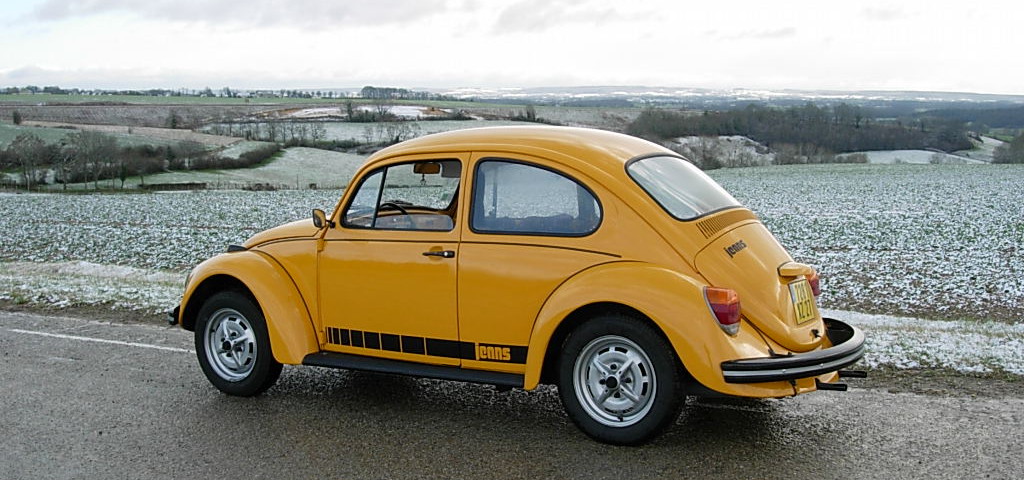
Paint reference: L16M "TUNIS GELB"
The S761 Jeans was only available in one color: L16M "Tunis Gelb".
The sales code for this color is E9 (or U3 for the very first models produced). This code can be found stamped vertically on the production plate located under the front hood, to the left of the hood latch.
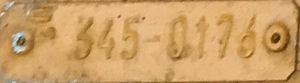
The U3 code appears on L16M "Tunis Gelb" Jeans from the very first production week (week 34).
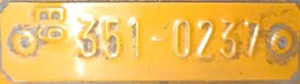
The E9 code, stamped at the top, appears on L16M "Tunis Gelb" Jeans starting from the second production week (week 35).
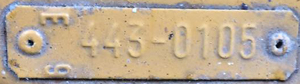
The E9 code was used for all other L16M "Tunis Gelb" Jeans production.
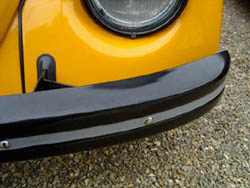
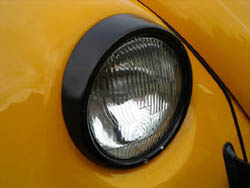
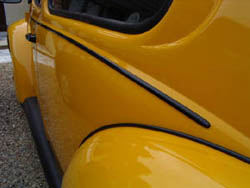
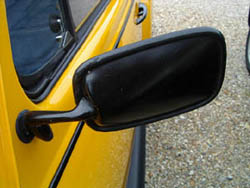
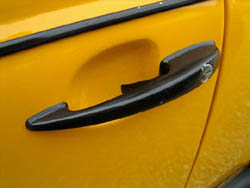
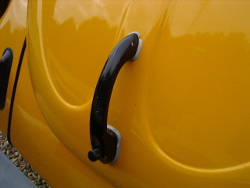
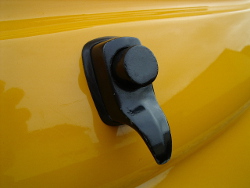
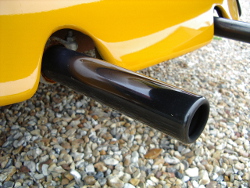
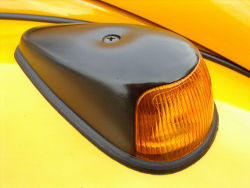
Elements that are usually chromed are painted black here, and a characteristic side stripe with the "JEANS" logo highlights the flanks. This logo is also found on the left side of the engine lid. The front and rear bumpers, headlight rings, front hood handle, turn signal housings, side mirror, quarter light frames, door handles, exhaust tips, and the engine lid button are all painted black. The side moldings and the windshield trim are made of black anodized aluminum. Note that the running boards have no trim strips, the bumpers are accented with a grey pinstripe, and the rear engine lid features a lockless push-button. The color generally accepted for these parts is L03 "Rallyeschwarz".
← Use your mouse wheel or swipe to scroll through the details →
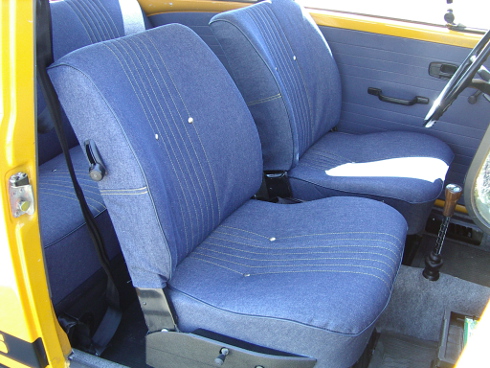
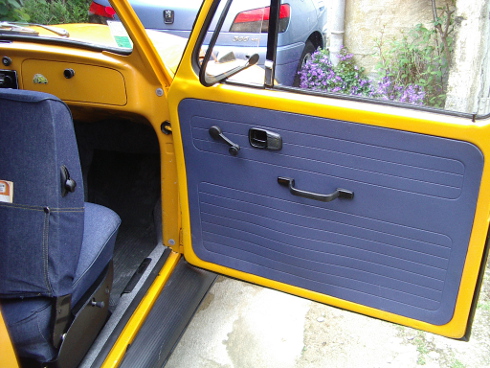
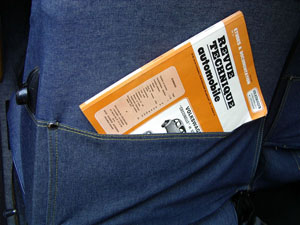
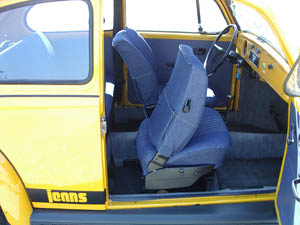
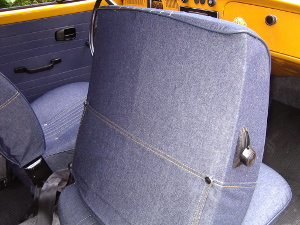
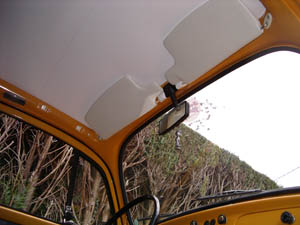
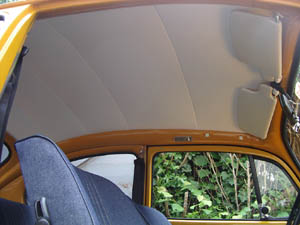
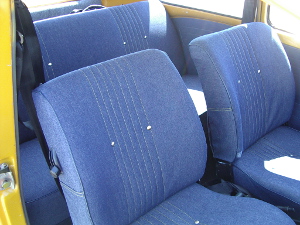
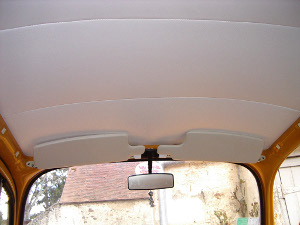
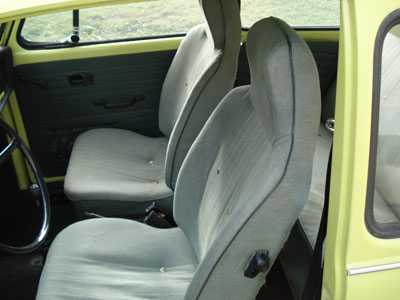
The upholstery is made of blue denim with yellow stitching. The piping is finished in dark blue vinyl. There is a storage pocket on the back of the front seats. The door panels are blue vinyl. The short-style headliner and sun visors are white. The carpeting is a grey low-pile material without piping. On the floor, there are four rubber mats.
← Use your mouse wheel or swipe to scroll through the details →
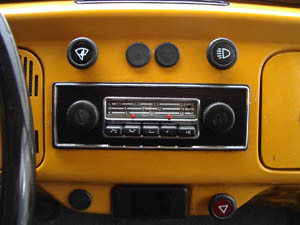
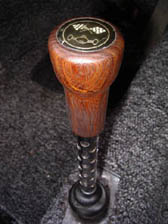
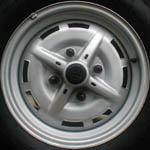
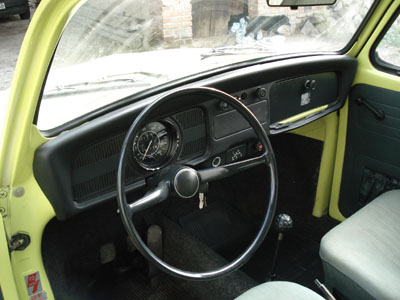
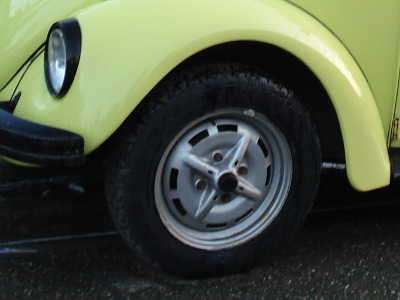
The Jeans model features: 12-volt electrical system, Lemmerz GT wheels, 155 SR 15 radial tires, a passenger sun visor without a vanity mirror, a speedometer with an integrated fuel gauge, a "sport" gear shifter, reverse lights, and the Blaupunkt "Wolfsburg" radio.
These features are documented via M-codes (Option Codes). Here is the specific list for the French market:
Excerpt from a Birth Certificate issued by VW for an October 1973 S761 Jeans delivered in France:
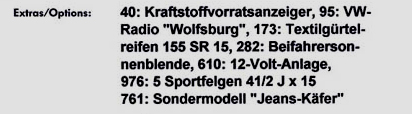
Equipment differences can be noted depending on the local legislation of the delivery countries.
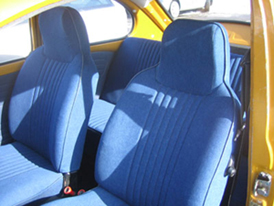
M 227: Seats with headrests
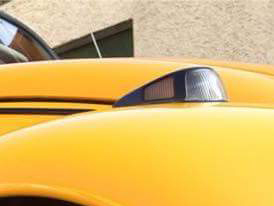
M 034: Perforated turn signals (Italy)
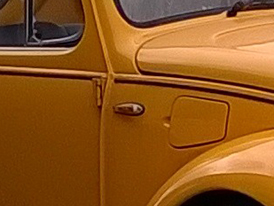
M 046: Side indicator repeaters (Denmark)
The new production batch was divided into two series: the "S714 Jeans 74" (Model 111) intended for the German domestic market, and the "S716 Jeans 74" destined for export (on both 111 and 112 models). There are few differences between these new series and the S761. Notable updates include the introduction of new color/upholstery combinations and additional equipment such as specific wheels, a heated rear window, or the gear shifter.
The S714/S716 series were available in three colors: L32K "Phœnix Rot", L20A "Marino Gelb", and L11C "Brillant Gelb".
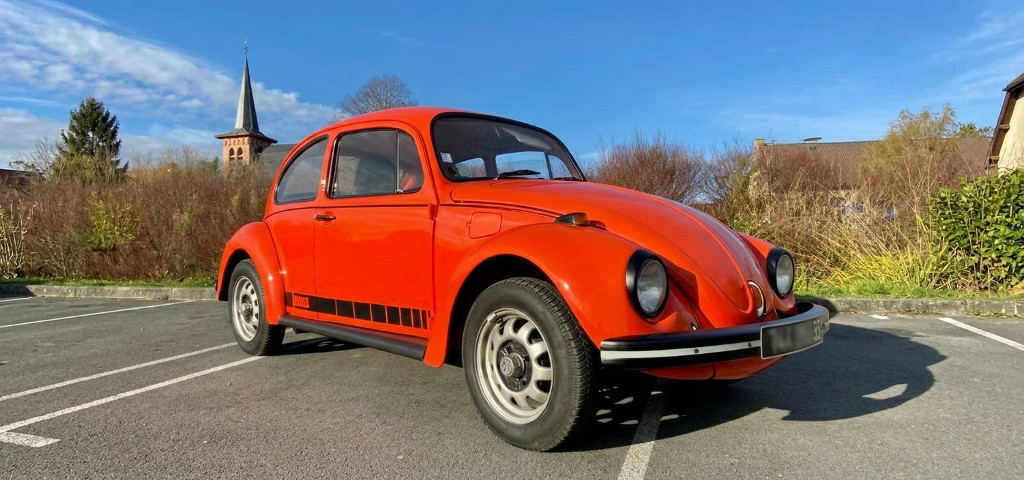
Paint reference: L32K "PHOENIX ROT"
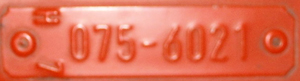
The H7 code, readable vertically on the production plate, corresponds to the color L32K "Phœnix Rot".
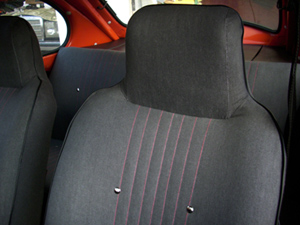
On the L32K "Phœnix Rot" S714/S716 Jeans, the seats are covered in dark grey denim with black piping and orange-red stitching. The door panels are black and feature map pockets. The carpeting is a grey low-pile material without piping. On the floor, there are four rubber mats. Above, the sun visors are white and the headliner is the short-style model.
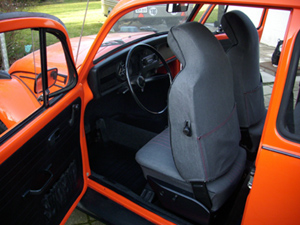
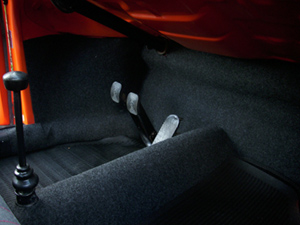
Paint reference: L20A "MARINO GELB"
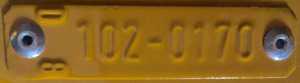
The D8 code, readable vertically on the production plate, corresponds to the color L20A "Marino Gelb".
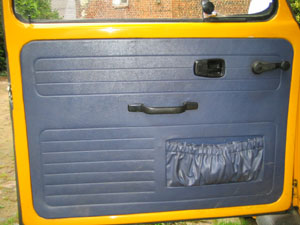
On the L20A "Marino Gelb" S714/S716 Jeans, the seats are covered in blue denim with blue piping and yellow stitching. The door panels are blue and feature a door pocket. The carpeting is a grey low-pile material without piping. On the floor, there are four rubber mats. Above, the sun visors are white and the headliner is the short-style model.
Paint reference: L11C "BRILLANT GELB"
The D4 code, readable vertically on the production plate, corresponds to the color L11C "Brillant Gelb".
On the L11C "Brillant Gelb" S714/S716 Jeans, the seats are covered in pale green denim with green piping and yellow stitching. The door panels are green and feature a door pocket. The carpeting is a grey low-pile material without piping. On the floor, there are four rubber mats. Above, the sun visors are white and the headliner is the short-style model.
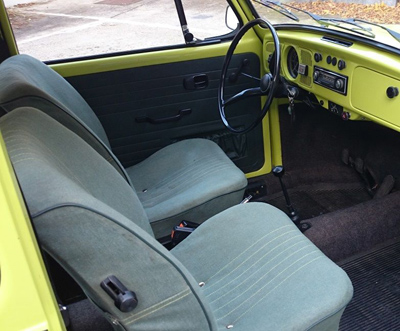
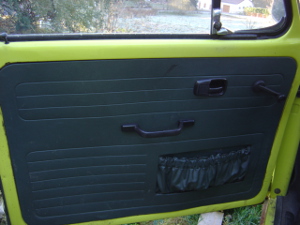
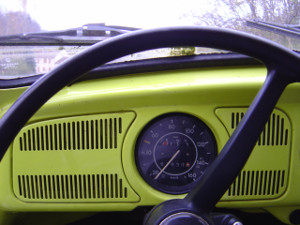
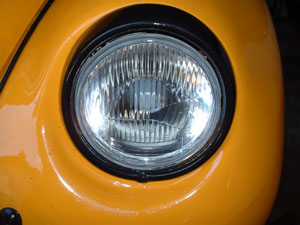
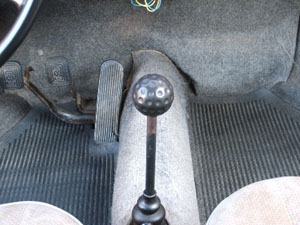
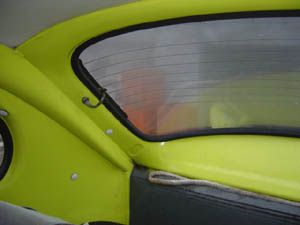
The S714 and S716 Jeans Beetles were equipped with a heated rear window, with the switch located under the dashboard in front of the fuse box. They also featured H4 headlights with single-screw trim rings. Inside, the gear lever was fitted with a "golf ball" shift knob, and the door panels included a map pocket. The interior rearview mirror featured a day/night position.
As with the S761 Jeans, the S716 models could receive different equipment depending on the country of delivery.
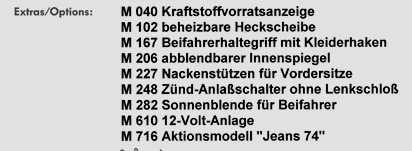
These features are documented as M-codes. Here is the list (specifically for the Belgian market):
Excerpt from a Birth Certificate issued by VW for an S716 Jeans delivered in Belgium:
Lemmerz wheels (4½J X 15), commonly known as "Weltmeister" (or "World Champion"), were fitted to the S716 export series.
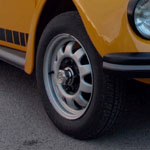
Note that on some examples, the center of the wheels was not painted black.
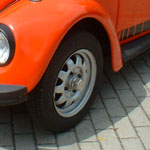
Seats with headrests (option M227), padded dashboard (option M228), and Lemmerz "GT" wheels (4½J X 15) were standard on the S714 Jeans.
The mechanical foundation is strictly identical across the S761, S714, and S716 models.
Chassis:
Engine: 1200 / Engine Code D
Electrical System: 12 volts, with alternator.
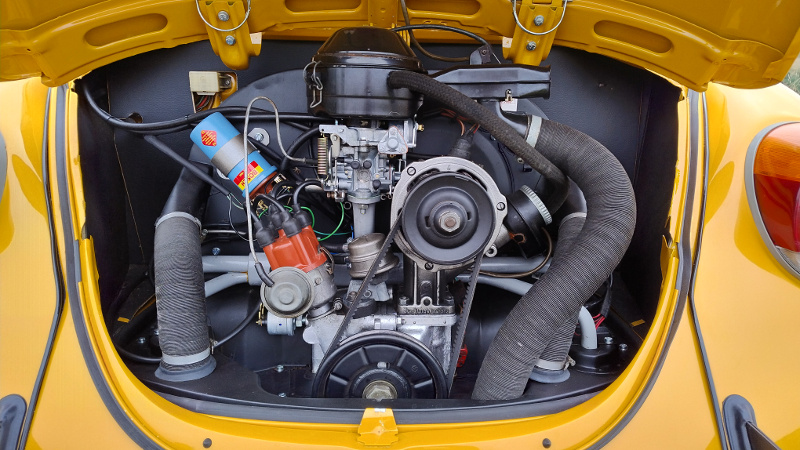
Here are some technical tips and key information to help you identify an authentic Jeans Beetle edition.
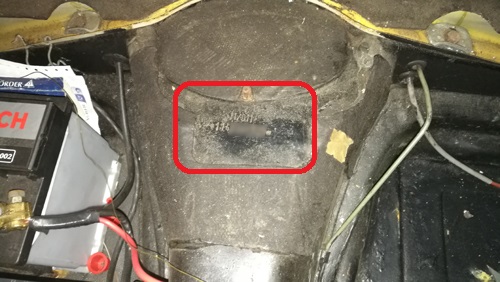
The chassis number is stamped onto the rear end of the central tunnel, directly under the rear bench seat.
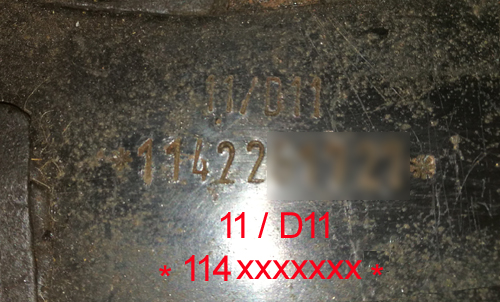
For the S761, S714, and S716 special series, the chassis number must strictly begin with 114 (where "4" indicates the 1974 model year), followed by 7 digits.
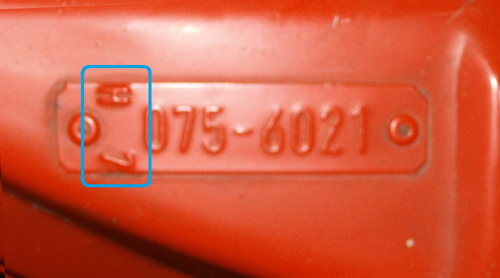
A small production plate is riveted to the front apron, just to the left of the hood latch hook. It provides two valuable pieces of data: the paint code and the exact assembly date. For a complete breakdown of the date stamp, you can check out the production plates decoder on the SE Beetles website.
The characters arranged vertically indicate the specific edition color code:
Code U3 also corresponds to L16M Tunisgelb (Tunis Yellow) on the S761 Jeans from the first week of production.
Code E9 corresponds to L16M Tunisgelb (Tunis Yellow) for the S761 series.
Code H7 corresponds to L32K Phoenixrot (Phoenix Red) for the S714 / S716 series.
Code D8 corresponds to L20A Marinogelb (Marino Yellow) for the S714 / S716 series.
Code D4 corresponds to L11C Brillantgelb (Brilliant Yellow) for the S714 / S716 series.
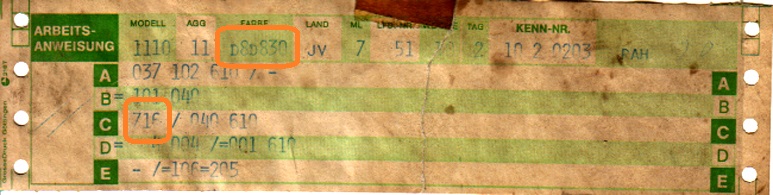
Another highly accurate historical document is the factory **punch card** detailing the exact delivery specification, including factory options (known as M-codes). This card is sometimes found among the original paperwork carefully preserved by previous owners.
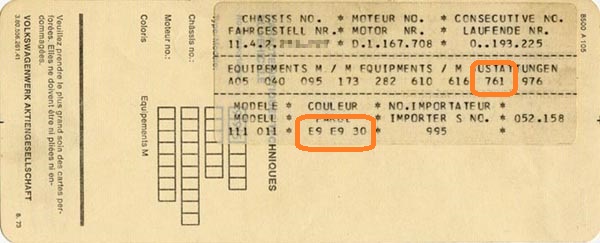
• First line: contains the chassis number, engine number, and an internal factory code.
• Second line: features all factory-installed optional equipment defined by M-codes:
• Third line: provides miscellaneous technical attributes for the Beetle:
- 111 011 = Type 111 left-hand drive, 1200 cc engine.
- E9 E9 30 = L16M Tunis Gelb paint combination (E9) with blue denim upholstery code (30).
- 995 = Delivery zone / Importer destination code.
The original paper factory inspection label (shown below) can sometimes still be found glued right next to the chassis number under the rear bench seat.
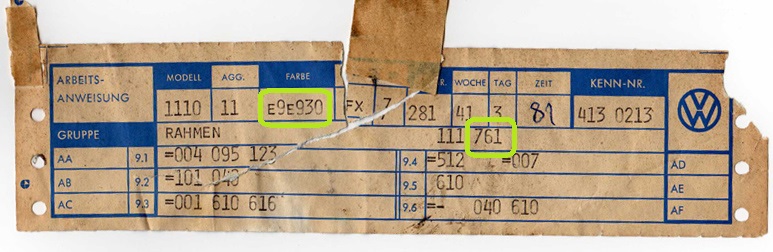
It cross-references crucial technical data, such as the color/trim combo (E9 E9 30 = L16M paint with blue denim upholstery) and the highly descriptive 761 special edition campaign option code.
Below is a slightly different factory layout showing the exact same style of data tracking (D8 D8 30 = L20A Marinogelb body on blue denim interior) tied to option code 716 for the Jeans S716 edition.